Theme: bootstrap_international.

Key concepts and insights Total count of insights (in English): 37

On this page you see Key Concepts, one of the most important principles according to which the world in general and the world of human beings operate.

These concepts are referenced throughout the Patterns series, including the Patterns for Victory series and Us or Them!. A concise summary and two or three key examples are provided at the beginning of each volume. Total count of insights in English language: 37.

A key concept in a book Forces of Psychohistory

(insight #1).
The Book's presentation Other insights from this book PDF

Ultracooperation

Saigon in Mexico, Mexico among the Arabs, and wild Africa in Saigon. These various sayings, referring primarily to the practice of obeying traffic regulations, refer to the issue of so-called ultracooperation. The core of this trait, acquired by people through the process of socialization, is subordination to a system of laws that defines the rights and obligations of community members – dependent, of course, on status and social standing.

In Neolithic societies, the upper limit of community growth seems to be 100-200 individuals. Larger communities are capable of survival thanks to the phenomena of emergent ultracooperation, susceptible to disruption and attack – the ability of people to cooperate regardless of kinship ties (clan, lineage).

The ability of humans to create state organisms or empires stems from the progress of biological and cultural coevolution. These are the laws and principles of so-called impersonal trust (with people outside the clan/family), respect for the dignity and property of strangers, and similar traits (►SP VII.7).

Large groups of strangers can cooperate when they are united by a belief in a so-called shared myth and trust understood as a public good. A shared myth is also a myth that energizes and mobilizes all types of collective effort. Historically, the most effective generators of such myths have been religions, especially Abrahamic ones. They are a key, most efficient component of the cultural software that drives the phenomenon of ultra-cooperation.

An example of an evolutionary leap that removes the invisible ceiling on community growth is the difference between the religion of the Old Testament and Christianity. One can become a follower of the former by birth. In Christianity, conversion occurs, consisting of undergoing a ritual of accepting a cultural package. The ritual is available to everyone without racial, cultural or other restrictions.

Open in new tab
Link X/FB
Buy a copy

A key concept in a book of the series „Patterns”

.

The urban graveyard trap

During parallel cultural and genetic evolution, changes point in the same direction. But this can only happen when the acquisition of specific traits increases fitness, meaning it leads to economic success and increases the reproductive (survival) chances of individuals operating as part of a given community.

Unfortunately, a phenomenon known as the "urban graveyard trap" stands in the way of such cultural-genetic selection. The mechanism of this evolutionary trap is that the populations of historical cities and towns grew solely thanks to a constant influx of economic migrants from rural areas. In some cases, this phenomenon was so strong that 30% of residents were born outside their center of residence. Figuratively speaking, to grow by 10%, an urban center needed at least twice as many migrants.

Researchers on this topic also point to another mechanism inhibiting cultural evolution, particularly strong in Europe. The point is to eliminate adaptations to the achievements of cultural evolution in Europe: individualism (in the sense of functioning outside clan structures), anonymous social interactions between strangers, etc. The phenomenon of negative selection was extremely strong in places of the most intense cultural evolution – in celibate monastic orders. Because those who lived in such societies could not have legitimate children, the transmission of both genes and cultural programming from one generation to the next was limited or eliminated.

Open in new tab
Link X/FB
The series in the Author's online bookstore

A key concept in a book Forces of Psychohistory

.
The Book's presentation Other insights from this book PDF

The Holy Sages of Ancient China

In the collection of cosmological concepts belonging to the Chinese conceptual legacy, the Holy Man (Shengren 聖人) appears. He is a person who can deduce from the current state of affairs what will happen. Such a being "grok" the nature of the Dao, the universal principle of all things, according to which phenomena occur in a certain way and not another. Thus attuned to the Laws of Nature, the laws governing the Universe, a person could, having seen the beginning, understand the end. "Reject emptiness, illusion, and perceive the fullness, the true world," Buddhist teachings proclaim. "Speak the truth, and the truth will set you free," Jesus exhorted. "The eye sees only what the mind is ready to accept," observed Henri Bergson.

All these and similar directives suggest that one must discard one's beliefs, prejudices, and often fallible knowledge in order to view the problem from a new perspective, usually eliminating mental blocks and enabling a brilliant solution.

Master Sun writes about such brilliant solutions in his The Art of War – in the context of winning battles and wars. The ancient strategist teaches us that the method of victory for the Master Warrior is the ability to reconfigure and reconceptualize the current and future states of the two components of force: zheng and qi. An inspired commander who manages to attune to their dynamic transformations and fluctuations will be invincible.

Open in new tab
Link X/FB
Buy a copy

A key concept in a book Forces of Psychohistory

.
The Book's presentation Other insights from this book PDF

The energizing myth, the mobilizing myth, and the shared myth

Such myths are the forces that allow communities to undertake the act of building a thousand-year empire. They are also the forces that cause an entire nation to collectively agree to sacrifice in order to build a better, proud future for its children.

Such myths are also packages of "acts of faith establishing world order" that allow for the creation of stable and prosperous societies.

They are a form of ideology. They are a package of culturally defining parameters, a set of beliefs and normative claims about the future and other groups of people, that justifies (gives the right to) dominate other people or use coercion or force against them in order to subordinate them in a hierarchical system and simultaneously seize their material resources.

This package has an energizing effect in that it stimulates large groups of people to work toward building a "bright future"—people who believe that "the future is theirs" because they are better than members of other groups based on any characteristic, such as race, level of civilizational development, or the right to regain dignity and honor. An example is the vision of a "thousand-year Reich" in 1930s Germany.

Open in new tab
Link X/FB
Buy a copy

A key concept in a book of the series „Patterns”

.

The doctrine of wuwei (attunement to the laws of nature)

The sage observes Heaven but does not help it.
Zhuang Zi

Fundamentally, every human activity is in some way linked to the ability to predict the future. This is the case with agricultural work, which requires an understanding, or at least a careful recording, of weather changes and the progression of the seasons. Even simple plants have evolutionarily developed mechanisms for recognizing the optimal moment for germination. This is due to the situational awareness mechanism of the Earth's orbital motion – please forgive my deliberately facetious phrasing. Germination is triggered by a chemical mechanism activated by the lengthening daylight hours in spring.
Already in the Observation and Orientation phase, the field for trickery and stratagems begins. How common this activity is in the world of investment and primordial nature! Take, for example, the hunting tactics of the black heron, native to Africa.

Wading in the shallows, the heron creates an umbrella with its wings, casting a shadow on the water. This allows the heron to see what's underwater. But it also attracts prey – small fish, which like the shadow because, hidden in it, they can more easily spot an approaching predator.

When delving into ancient Chinese scriptures, it's impossible not to come across the Book of Changes. A "rational" person will be put off by its being called a book of fortune-telling. This was initially the case with me.

The Book shows how two complementary forces, Yin and Yang, transform in constant oscillation and in accordance with the Supreme Universal Principle, the Dao – hence Taoism is the name of both a philosophy and a religion. But the Book of Changes, although most people indeed treat it mystically, turns out to be a perfectly rational guide to perceiving the laws and patterns of the Universe. Events and phenomena oscillate or change their intensity at their own rhythm. This is the case with the seasons, the daily cycle, the aging of organisms, the combat readiness of armies, economic cycles. Everything.

A person attuned to these laws, meaning someone who has collected data on past events (Observation) and unearthed regularities "buried in tons of data" (laws of physics, laws of economic cycles, laws of human nature, etc.), is able to build a model of future changes in the state of affairs (Orientation) and adapt their actions accordingly.

The veil of mysticism conceals a completely rational guide to adapting to the rhythm of oscillation of various parameters of world phenomena. If these parameters are normalized and harnessed into mathematical and physical formulas, we obtain a set of tools we call the scientific method.

Let's summarize the Holy Men's favorite philosophy of action, the philosophy of "non-action," with a joke-paradox. How humorously conceals a profound truth about human nature or the nature of the world we live in:

How many Zen masters does it take to screw in a light bulb?
None. The universe spins the light bulb, and the Zen master steps aside.

Open in new tab
Link X/FB
The series in the Author's online bookstore

A key concept in a book Forces of Psychohistory

.
The Book's presentation Other insights from this book PDF

The doctrine of unrestricted warfare

Chinese scholars of ancient military thought have found remarkable similarities in the geopolitical situation of the ancient Chinese world and the multipolar order, or rather disorder, that began to emerge in the late 1990s.37 Both periods witnessed a protracted process of erosion of the authority and prestige of the sole hegemon of the "universal" civilization. One could therefore hypothesize that the rules of survival, building power, and engaging in conflict will also be similar in both eras.

It was on such semi-philosophical foundations that two contemporary Chinese analysts, Qiao Liang and Wang Xiangsui, based their short pamphlet "Unrestricted War" in 1999.

"Unrestricted war" is one in which the parties engage in struggles in all spheres of the functioning of the hostile homeostat. The goal is to uncouple all the influence-prone mechanisms of ultra-cooperation. This includes political life, and therefore the connection between citizens and the ruling elite, diplomacy, economics, technology, religion, and cultural life. Hostile military actions are to occur only sporadically.
The authors, colonels of the Chinese PLA, state that terrorism and destabilizing activities in the spheres of influence of Western powers are just one of many instruments used by various entities, implicitly including China, to wage war against the United States.
One Polish analyst, Mirosław Banasik, states that the visions of Chinese specialists go beyond the traditionally understood dimensions of warfare described in Western doctrines. Of course, we are talking about so-called hybrid warfare or fifth-generation warfare (5GW, spiritual warfare). Banasiak formulates the following exceptionally pertinent thesis:
Victory should not be sought in the physical dimension, as the struggle takes place outside the traditionally understood battlefield.
The concept of unrestricted warfare is based on any influence (including financial support) for any activity, such as corruption or criminal activity—in short, anything that is intended to paralyze networked social relations. At the same time, "the level of provocation should be kept below the threshold at which the attacked state could lose all its capabilities. […] Influencing those elements of the state's functioning that the adversary does not expect [to attack] and which are particularly sensitive to this type of activity."
In other words, understanding the conduct of unrestricted warfare requires a shift in mentality and a shift away from the traditional understanding of how armed conflicts are fought. In an analysis of the activities of non-governmental organizations, I state: "The defense mechanisms currently available to Western countries, such as civil and criminal law, secret and uniformed services, as well as the customs and perception of threats by the population, are defensive instruments that have no point of contact with acts of hybrid warfare."

This stems from the fact that hostile actions (i.e., those that weaken social cohesion, erode trust between the government and citizens, etc.) are designed so that they cannot be classified as actions of an officially identified geopolitical adversary. An example of this perceptual helplessness is undoubtedly the ongoing media campaign shaping the mentality of women in Poland, but also in other Western countries. A user of the Wykop portal juxtaposed the fact that there is a deficit of single women in Poland, reaching a controversial figure of one million, with the general tone of Onet's articles, which seem to promote marriages with foreigners, promote hypergamy and promiscuity, and simultaneously devalue Poles as potential spouses. The second case, well documented by US government agencies, is the discovery of funding for extremist climate organizations by Chinese foundations.

Open in new tab
Link X/FB
Buy a copy

A key concept in a book of the series „Patterns”

.

Self-domestication in Homo sapiens

The concept of self-domestication in Homo sapiens draws significant parallels between human evolution and the domestication of animals such as dogs. For the record, domestication is distinct from taming, which is an individual process that does not influence genetics. Domestication leads to permanent, heritable changes in morphology and behavior under the influence of the human-created environment, including culture. A key piece of evidence for this incredibly rapid rate of genetic change is Dmitry Belyaev's experiment with silver foxes. It demonstrated that selection for docility over just twenty generations resulted in canine-like traits in the foxes: changes in coat color, shorter snouts, and significant hormonal shifts—a decrease in adrenaline levels in favor of the "happiness hormone," serotonin.

In the human context, the coevolution of culture and genetics plays a key role. According to Joseph Henrich, culture domesticates our species by favoring individuals capable of learning through imitation and instinctively adhering to group norms. For millennia, human societies have exerted selective pressures that promote cooperation and suppress antisocial behaviors such as aggression and extreme selfishness. This process has led to the development of a "psychology of norms," ​​causing people to often follow rules without thought and biologically prefer individuals similar to themselves in terms of language, rituals, and even appearance (race).

Modern evolution also manifests itself in physiology. The ability to read and write permanently alters the structure of the brain (occipitotemporal regions), making contemporary populations neuroanatomically distinct from historical societies. Furthermore, research on the Microcephalin gene suggests that brain evolution is still progressing and varies regionally (racially).

However, the author highlights mechanisms that inhibit these processes, known as evolutionary traps. One of these was the "urban cemetery effect," whereby historic cities, despite their cultural development, were characterized by low fertility, preventing acquired traits from being passed on. Celibacy in religious orders operated similarly, eliminating from the gene pool those individuals best suited to function within civilizational structures, constituting a form of negative selection, hindering biological evolution.

Open in new tab
Link X/FB
The series in the Author's online bookstore

A key concept in a book Forces of Psychohistory

.
The Book's presentation Other insights from this book PDF

Prestige-biased-cultural-transmission

This term, used in the professional language of anthropology, explains the direction of flow of cultural patterns. Attractive, and therefore willingly copied and imitated, are those patterns that were created by communities perceived as strong, wealthy, and with a history of success.

Open in new tab
Link X/FB
Buy a copy

A key concept in a book of the series „Patterns”

.

Multiple planes of causality

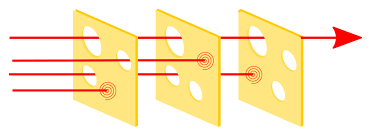
Causes are not usually single-factorial. Investigations into the cause of a passenger plane crash typically refer to the cheese slice model. Each slice has its own, pseudo-randomly distributed holes. Several slices represent successive elements in a chain of events: mechanical error, pilot fatigue, material fatigue, and so on. A crash occurs when a configuration of slices occurs that leads to an accident. This hypothesis is formally called the Swiss Cheese Hypothesis.

http://chiny.pl/pliki/patterns-swiss-cheese-model.png

There's another way to conceptualize events and explain how various forces influence the course of events. This reconceptualization involves understanding that, on one level, economic forces, a trend of events might lead to, say, social unrest. However, secret police intervention, such as arresting the ringleaders, might prevent the outbreak from occurring.

Open in new tab
Link X/FB
The series in the Author's online bookstore

A key concept in a book Forces of Psychohistory

.
The Book's presentation Other insights from this book PDF

Luxury ideology (a. prestige elevating ideology)

"Are we the baddies?" (opinion)
Our culture, including popular culture, is saturated with the guiding principle: "humans and their civilization are evil incarnate." This countercultural trend/virus seems to attract all sorts of beautiful spirits and rebels. I would even venture to say that the presence of this thread (striking this chord of the progressive worldview) is a fundamental element for a film or literary work to be considered a bearer of "truth" or aspiring to bestseller status.

We see this thread in the well-known legend of Pocahontas, one iteration of which is the recent film Avatar (2009, directed by James Cameron). The theme of "humans and their civilization – the evil ones, elves, and other non-humans – a true civilization of ancient wisdom and nobility" is rehashed to the point of nuisance by Andrzej Sapkowski, author of the Witcher series, in almost every philosophical conversation between the characters:

"Your larger cities," complained the dwarf, accompanied by the parrot's screeching curses, "as one man, you built on elven and our foundations. You laid your own foundations for smaller castles and towns, but you still use our stones for the facades. And yet, you keep repeating that it is thanks to you, humans, that progress and development are taking place."

I myself was immersed in such visions, and until quite recently – under the overwhelming influence of literature and films. For fans of the Witcher saga, Geralt, I can propose an experiment: reading the entire saga with the goal of "propaganda against human civilization, enslaving and murdering civilizationally superior beings" (this is probably racism, but directed self-reflexively, so "legal"; see more on p. 280). Only far, far away, in the final volume of the saga, do we learn that the noble elves – murdered for being different by the "xenophobic human wilderness" – themselves took over another world, committing a holocaust of humans, whose remnants served the elves as slaves.

The beautiful vision of a tribe living in harmony with nature includes, among other things, the renunciation of worldly goods (no artificial fertilizers and – mentioned earlier – dental care), living in harmony with nature, generosity and selflessness, combating climate change, unlearned wisdom, etc. These and other characteristics are attributed to the Germanic people – they come from Tacitus's treatise (c. 55–120) titled Germania… and are simply a form of criticism of Roman society at the time.

The insertion about atmosphere is a little joke of mine. It has an easily decipherable purpose. It points to the following eternal pattern:

Just as there are prestigious products and brands (e.g., BMW, iPhone), so too do "prestigious ideologies."

Prestige feeds both thunderous, haughty authorities and listeners who can savor the feeling of being at the forefront of morality and progress. Disgust and contempt for one's own group are a timeless tool of influence, as they provide a narcotic sense of elite status, while authorizing the lecturing and contempt of those with inferior views. A perfidious moral authority, if it can imbue its victims with a sense of hierarchical superiority over the "rabble and the dark ages," can manipulate them into any activity, including outright betrayal and genocide (»VII.7.D).

The vision of a miraculous life in the bosom of nature ignores the appalling barbarism in which a significant portion of primitive peoples lived, which resulted, among other things, from limited ability to produce food and—generally—access to resources necessary for survival. These deficiencies led to cannibalism (widespread worldwide), human sacrifice (similarly), the Flower Wars in South America, and slavery, common in all cultures.

Such idealistic visions provide moral force and arguments in disputes over the right to possess territory and, therefore, the resources within it. For this reason, they are a significant tool of influence in politics and geopolitics (see p. 547). In the case of the Aboriginal peoples of North America, popular rhetoric includes the phrase "whites stole the Indian lands," which is rudely countered by documentation of wars between tribes and confederations of tribes. During these wars, the territories were subject to constant "population exchanges"8 – long before the arrival of Europeans.

In Western countries, the Swiss philosopher Jean-Jacques Rousseau (1712–1778) has been hailed as the prophet of the vision of savages as "peaceful children of nature."9 This vision is exemplified by the moving speech of Native American activist and actress Sacheen Littlefeather, who accepted the Oscar for Best Actor in 1973, replacing Marlon Brando. This occurred during the infamous Wounded Knee Occupation, a protest against government treaty violations and acculturation openly pursued through the instruments of racism and institutional discrimination. This included, among other things, the destruction and disregard by government agencies of traditional clan structures—incompatible with the advanced cultural software of modern society (see essay VII.3).

Open in new tab
Link X/FB
Buy a copy

A key concept in a book Forces of Psychohistory

.
The Book's presentation Other insights from this book PDF

Fragility, antifragility and system resilience

Continuing, systems thinking means having the ability to find critical points. Whoever better understands how an attack will disrupt the entire system (e.g., knows the location of the critical point whose disruption will lead to a knockout) has victory in their pocket.

Fragility is the susceptibility of a system to destructive stimuli. A porcelain cup is fragile. A hammer blow will destroy it. A rubber ball demonstrates resilience – an identical hammer blow will cause it to deform, and when the impact is removed, it will return to its original shape.

But there is another inverse of fragility – antifragility. This is a characteristic of systems, especially homeostatic ones, that causes the system to increase its resistance to subsequent occurrences of a destructive stimulus. In other words: what doesn't kill us makes us stronger.6 Biological organisms are antifragile thanks to the immune system and vaccines: subsequent infections with the same or similar pathogens are combated with increasing effectiveness. Armies fighting each other also exhibit antifragility: they learn to counter and use ever new tactics or strategies invented by the opponent.

Open in new tab
Link X/FB
Buy a copy

A key concept in a book Us or Them 2: Israel in the Middle East

.
The Book's presentation Other insights from this book PDF

Escalatory domination

The Hamas attack of October 7, 2023, was an inspired operation in a way that was difficult to discern. It was deliberately designed to provoke an appropriate Israeli response. Under the doctrine of so-called escalatory dominance, such a response has always been ruthless. Hamas triggered the decision to eliminate the Gaza Strip. This led to another, this time global intifada, a Palestinian uprising – completely negating the viability of the so-called two-state solution.

The diabolical cunning of this plan lies in the fact that it involves a phenomenally effective narrative attack, prepared for years. Despite 1,400 Israeli casualties, the Palestinians were positioned in a position of moral superiority, and Israel in the position of a criminal state carrying out a genocide against Palestinians in the Strip. The deaths of civilians, including children, are a calculated sacrifice resulting from the threefold logic of the entire conflict. These people either refuse to leave their homes or cannot. Most likely, they are also being forced to stay by Hamas.

The inevitable next act of this drama is the pressure on our allies, meaning us – Europe (the collective West) – and all those who would support Israel, including an oil embargo. An embargo as severe as the 1973 one against the United States.

Open in new tab
Link X/FB
Buy a copy

A key concept in a book Forces of Psychohistory

.
The Book's presentation Other insights from this book PDF

Darwinian Theory of Beauty

According to this theory, promoted by Denis Dutton, Homo sapiens, as a cooperative species, has developed a unique evolutionary adaptation that enhances collective survival. We consider "beautiful" that which requires craftsmanship, self-discipline, and effort. Behaviors characterized by these traits evoke a sense of satisfaction. Above all, however, they trigger the expression of social approval.

This approval activates the dopaminergic system in a member of a community who has developed the craft and discipline of creating material goods. This mechanism is linked to the mechanism of seeking social approval, present in each of us. In other words, cultures that reward their hosts for effort, determination, craftsmanship, or impersonal pro-sociality create more incentives to work on themselves and work for others. As a result, they will produce and generate more and better products of material culture (e.g., weapons). They will also create more laws and customs that enhance the capacity for cooperation and ultra-cooperation.

The entire "evolutionary theory of beauty" is incorrectly conceptualized and misleadingly named by its proponents. The mechanism of social approval is not a "sense of beauty." It is a mechanism, a product of biological and cultural coevolution, that increases the fitness (natural selection) of a community by elevating the status of those members whose effort/talent/sacrifice enriches the entire community. Its essence is the acquisition by human communities of the ability to survive and create synergistic engines of cultural transmission (see VI.3 Civilizational Formatting).

Open in new tab
Link X/FB
Buy a copy

A key concept in a book Forces of Psychohistory

(insight #3).
The Book's presentation Other insights from this book PDF

Cultural software

Homo sapiens is a social species, and its ability to survive (reproduce, acquire resources) is generated not at the individual level, but at the level of cooperative communities. This ability to survive is based on mechanisms of custom, law, and the ability to self-control. It is through these instruments that a community enforces behaviors on its members that are beneficial to the community, but sometimes detrimental or "oppressive" to the individual.

Open in new tab
Link X/FB
Buy a copy

A key concept in a book of the series „Patterns”

.

Cultural sensorium

Lem defines this concept as follows:

The sensorium is the totality of all the senses and all the pathways (usually neural) through which information informing us of the "existence of anything" reaches the central nervous system.
Later in his argument, Lem speaks of such extensions and prosthetics of the sensorium as binoculars and microscopes. But he also speaks of mathematics – the language that allows us, Homo sapiens, to explore those properties of the world that are inaccessible to our senses, or that we have trouble grasping the rules of their operation. With mathematics, logic, and the conceptual apparatus of sciences such as biology and chemistry, we blindly tap the world and its rules.

Concepts and concepts are the tools through which we perceive and then harness for our own use the patterns and regularities of the world and human nature. These concepts help us build mental models and methods for influencing others. The quality of these models and methods determines the quality of our decisions.

Open in new tab
Link X/FB
The series in the Author's online bookstore

A key concept in a book of the series „Patterns”

.

Cross-cockpit authority gradient

This is a key element of the CRM (Crew Resource Management) system. It manages the status gradient between task force members. It was developed by NASA and its implementation is credited with a dramatic decline in the number of aircraft accidents.

Example:

Analyses of aircraft incidents and disasters provide an inexhaustible source of examples of how different cultures permanently impair or enhance our personality traits. CRM (Crew Resource Management, ‡36:35.D) specialists use the eponymous parameter "intra-cockpit authority gradient." This characteristic of interpersonal relationships is referred to in other contexts as a particularly useful parameter called power distance. In various work environments, the authority of a commander or leader (their status in the hierarchy) is a regulator that enables and determines the quality of information exchange (feedback) between team members. Power distance pathologies can easily disrupt the rhythm of teamwork or distort the principles of assigning responsibility (accountability) to team members.

During disaster analyses, identifying CRM and power distance disorders is a key focus for investigators. Did the status and authority relationship allow the co-pilot to comment on the captain's errors? Was the crew member afraid to offer suggestions for corrective action? This could include critical issues such as enforcing a procedural decision to abort descent.

The essence of the problem is that institutions or cultural pathologies prohibit contesting the decisions of those higher up in the hierarchy. It turns out that the parameters of various cultures – whether on a national or corporate scale – "insidiously" block the implementation of safety procedures. As a result, optimal use of technological products or management of decision-making activities is no longer possible. The mere recognition and definition of CRM issues is the main reason for the rapid decline in the number of aviation disasters since the 1990s. But disasters caused by information flow dysfunction resulting from a culture of hierarchical regulation still occur today, even in countries and companies perceived as "orderly" and "first world."

One example is the Taiwanese flight GE222 crash on February 23, 2014. According to the report, the co-pilot did not adequately challenge and correct the captain's errors. As a result of the lack of decision-making intervention, the plane – flying in extremely unfavorable weather conditions – descended below the minimum safe altitude and crashed on approach. Elements of the culture of the ethnolinguistic group and the region's inhabitants, as well as the company's work culture and safety culture, come into play. This can include things like allowing deviations from procedures and hiring individuals with suboptimal mentalities and habit structures. Simply put… it's about hiring toxic apes in positions of power. Among the countries where cultural challenges for trainers and personnel are the highest are Korea and India.

A prime example of a disaster caused by a high authority gradient is Korean Air Cargo 8509 in December 1999. It resulted from exceptionally "tweaked" cultural parameters: the exceptionally strong hierarchical social relations in Korea, the work culture of a specific airline, the difference in seniority between the captain and co-pilot, and the fact that the captain was, moreover, a retired high-ranking military officer with a strong habit of dominating subordinates and the course of events.

Open in new tab
Link X/FB
The series in the Author's online bookstore

A key concept in a book of the series „Patterns”

.

Costly signalling

It's about acts of supreme sacrifice by "fanatics," which ensure that "ordinary" members of a community receive confirmation of the righteousness of their own cause, including in their fight against a community conflicting over the same resources. Costly signaling, especially religious signaling, is therefore an instrument for building social cohesion.

We must keep in mind the content of the truly inspiring work "Cooperation and Commune Longevity...". One of its main, well-documented visions is an unusual approach to so-called "costly signaling." The more a given community produces fanatics, zealots, and people psychologically prepared to go to war in defense of their faith or their nation, the greater cohesion the entire community will be able to achieve, and at the same time, to coax cooperation from its members through requests and threats. And here – in developing the capacity to survive at the level of entire civilizations and geopolitical centers – we, the Christian world and the "decadent West" – are utterly defeated by the effects of the work of Islamists.

More on this topic: Richard Sosis, Eric Bressler, "Cooperation and Commune Longevity: A Test of the Costly Signaling Theory of Religion," "Cross-Cultural Research," 2003, Volume 37, Issue 2.

Open in new tab
Link X/FB
The series in the Author's online bookstore

A key concept in a book Us or Them 2: Israel in the Middle East

(insight #5).
The Book's presentation Other insights from this book PDF

Conflicting agendas

It is obvious that our long- and short-term plans can be contradictory. The same applies to loyalty to communities and the selfish goals of the individual belonging to them. In the volume "Us or Them!" vol. 2, the main theme is the contradiction of community interests in a situation of external conflict – with another community. The essence of these contradictions is the hierarchy of loyalties to various centers of influence.

An example is individuals belonging to an enslaved or colonized community, who are pushed into positions of power so that external geopolitical or business forces can pursue their interests, which are diametrically opposed to the interests of the "victims." We usually call this elite corruption in colonies or quasi-colonies, and as an example, we cite various African states which, despite gaining formal independence in the second half of the 20th century, are still deprived of sovereignty – but through economic mechanisms and, among other things, as a result of the inability to develop elites resistant to corruption on an international scale.

Open in new tab
Link X/FB
Buy a copy

A key concept in a book Forces of Psychohistory

.
The Book's presentation Other insights from this book PDF

Behavioral addictions

Dominance Fetishes – The Struggle for Status and Hormonal Infusion as the Driving Force of Human Activity

Introductory Note: I state with full conviction that the civilization of a human being, the process of socialization and raising a young person (including the instilling of the key ability of self-control), in the earliest phase of these processes involves remodeling and retuning the functioning of the brain, and more precisely – a radical, physiological reconstruction of the structures responsible for motivation.

The most important of these is the dopaminergic system. This note was written after extensive consideration of the content of dozens of books ranging from ancient didactic narratives, through anthropology and the issue of restrictions on sexual behavior, to contemporary military and intelligence training manuals.

A trained individual is no longer driven by animal instincts for survival – obtaining food and reproduction. Its rewards and punishments become approval and punishment for pro- and anti-social behavior. Ideally, the individual becomes an element that enhances the collective survival capacity of an ultra-cooperative community (p. 454). This survival capacity is the result of biological coevolution (based on inheritance, DNA code) and cultural coevolution (based on intergenerational transmission).

In other words, each of us is part of a larger whole – a community that has developed a package of cultural software, installed within us from the cradle. The conflict between primal instincts and the cultural superstructure, between "egoism" and the interest of the community, manifested in Western culture as the struggle between Good and Evil, has been and always will be the deepest essence and the material from which all creators of motivational systems draw their building materials: ideologies such as capitalism or powerful empires.

Second note: My own vision-hypothesis of dominance fetishes presented in this essay—though based in part on the work of psychologists, psychiatrists, and anthropologists—does not deserve to be called fully scientific. It is merely a conceptual framework intended to serve a specific practical need. It is intended to reduce informational chaos and support the identification of people exhibiting toxic behavior. In other words, in my opinion, it has predictive and guiding power over human behavior. A magical concept present in contemporary psychology that summarizes the entire argument below in a way that is closer to methodological correctness is "behavioral addictions."

The Theory of Fetishes as a Key Mechanism of Hormonal Addictions

We are all hopelessly addicted to drugs with no hope of escaping the addiction. This addiction is the essence of our lives and an integral part of human nature. What we can do – and that's quite a lot – is to achieve what's known as a secondary adaptation of biological neurophysiological mechanisms to harness them for the construction of civilization... To manage this addiction so that its effects are beneficial to us and society. Our hormone addiction is governed by three simple rules:

The examples listed below, but also the entire "theory," are a form of reconceptualization. For me, this theory serves as a tool for controlling my own behavior and that of others. The ability to predict human behavior it provides stems from our biological makeup and cultural programming, which exhibit nonlinear, difficult-to-control plasticity.


Fig. 1. Dopaminergic pathways in Homo sapiens – ideogram.

Mechanism of action of drugs and dopamine

The "dominance fetish theory" combines two observations: the reconceptualization that the actual drug is hormones produced by the brain, not psychoactive substances, and the existence of an entire market for behavioral addiction treatments.


Addicts can be influenced by the strangest stimuli. One former drug addict had to avoid cartoons because the packages his dealer once sold him featured cartoon characters.

"Drugs jump to the craving circuit"—this is how Alan Leshner, former director of the National Institute on Drug Abuse in the US, described their effect. The brain's dopamine-driven motivational system is stimulated much more intensely by psychoactive substances than by natural rewards like food and sex. Control over the brain systems that evolved for the crucial purpose of keeping us alive is taken over by the addictive chemical. Incidentally, this explains why food and sex addiction have so much in common with drug addiction.

"Hard" drugs artificially trigger the dopamine system: they bypass the complex "surprise" (anticipatory arousal) circuits. The connection between the rapid increase in drug levels in the blood and the intensity of the dopamine release causes addicts to eventually switch to intravenous injection. Previously practiced routes of dosing no longer provide the desired thrill. The addiction deepens, and the addict is left with only a gnawing craving for the next fix.

In its natural state, this system fires three to five times per second. The frequency increases to twenty or even thirty times per second when stimulated by a stimulus. The dopamine system shuts down when the expected reward is not presented. Then, the frequency of reward hormone releases drops to zero, and the addict "falls into a black hole." The shutdown of dopamine leads to a feeling of resentment and deception.

Game designers apply this knowledge of these mechanisms of the human motivational system to practice. Online games are an excellent tool for studying human nature, based on quasi-evolutionary selection. They collect information about moments of interruption, play time, and what stimuli prolong this time.

Tom Chatfield, a game theorist, has stated that the largest games have collected terabytes of data on players. They know exactly how to stimulate and suppress dopamine release. To illustrate, the optimal percentage of chests containing items a player needs is a magical 25 percent. The optimal number of items needed to advance to the next level of the game is 15. This ratio causes players to spend the most time playing the game. In some countries, laws are being created with the intention of prohibiting the implementation of the most addictive game mechanics.

The mesocortical pathway is the result of socialization and civilization of human beings to function in [ultra-]cooperative communities.

Tip: view human characters through the lens of a "fetish that supplies happiness hormones."

Open in new tab
Link X/FB
Buy a copy

A key concept in a book of the series „Patterns”

.

A natural advantage

In the short story "Natural Advantage," Lester del Rey describes humanity's contact with a race that evolution had endowed with an additional sense. This sense enabled them to perceive physical phenomena invisible and counterintuitive to humans. Thanks to this natural advantage, these aliens came to Earth, not the other way around. The aliens felt sorry for the Earthlings, whose senses were so limited, and therefore unable to travel between the stars.

But endowed with hyperspatial technology, a parting gift, the Earthlings set to work. Soon, to the aliens' astonishment, an Earth-based spacecraft appeared in the skies of their home planet, powered by hyperspatial technology so advanced that the aliens could only dream of it.

In this masterfully crafted story, it was the Earthlings who had the natural advantage – the lack of this additional sense. This forced humans to construct mathematical tools: theories, calculations, and mental models. They leaned on this mental apparatus like a blind man with a white cane, as Stanisław Lem so graphically—and accurately—described (p. 202). As a result, they developed an advanced theory and practice for which their cosmic friends had no real impetus.

Open in new tab
Link X/FB
The series in the Author's online bookstore

A key concept in a book of the series „Patterns”

(insight #2).

A homeostat

A homeostat is any autonomous or quasi-autonomous system capable of making decisions and taking actions that prolong its existence. In the case of living (biological) beings, the above definition must be expanded to include the ability to produce offspring.

The ability to make decisions (processing sensory data into a model/perception of the world) requires energy.

Acting on the basis of such decisions also requires energy. Both activities therefore require the acquisition of the ability and tools to obtain energy and resources from the environment... always at the expense of competitors, as resources are always limited. In a typical situation, this energy is obtained at the expense of other homeostats – in a zero-sum game, driven by the logic of "them or us!"

Open in new tab
Link X/FB
The series in the Author's online bookstore

A key concept in a book Forces of Psychohistory

.
The Book's presentation Other insights from this book PDF

A high-trust society

Still only in Polish language:

Społeczeństwo wysokiego zaufania
Open in new tab
Link X/FB
Buy a copy

A key concept in a book of the series „Patterns”

.

A black swan event

These are events that are impossible to predict because they cannot be "deduced" from currently observed characteristics of the system and its operating environment. Nassim Taleb, author of the book Black Swan, provides an iconic triple example of a Las Vegas casino. It was the unsuccessful actions of professional card counters or tricksters to outplay the casino that threatened its existence. Among the events causing existential threats were, among others, the casino accountant's failure to report large winnings to the IRS (Internal Revenue Service) and the owner's withdrawal of ransom money from the casino cash register for his kidnapped daughter.
When a black swan occurs, systems unpredictably become more or less vulnerable to damage – they undergo a so-called stress test. The inherent inability of the system (e.g., a superpower) to predict such events and, therefore, to take preventive measures that could limit the damage. The ability to bring such events into being is the ability to attack at the level of a Master. The Chinese Holy Man is an important caveat, and at the same time a warning against "soundingly wise observations." What doesn't kill us the first time weakens us and will kill us the next time. Examples include exposure to heavy metal vapors and radioactive isotopes.

a master of attuning himself to naturally and spontaneously occurring events and trends. The emergence of the coronavirus in 2020 was a black swan: it shattered all predictions and plans made and laid by corporations and major powers on the geopolitical stage.

Open in new tab
Link X/FB
The series in the Author's online bookstore

An insight in a book Sun Zi and The Art of War. Philosophy and Practice of Influencing the Course of Events

.
The Book's presentation Other insights from this book

Still only in Polish language:

Rekonceptualizacja
Open in new tab
Link X/FB
Buy a copy

An insight in a book of the series „Patterns”

.

Still only in Polish language:

Formatowanie cywilizacyjne
Open in new tab
Link X/FB
The series in the Author's online bookstore

An insight in a book of the series „Patterns”

.

Still only in Polish language:

Sprawczość
Open in new tab
Link X/FB
The series in the Author's online bookstore

An insight in a book of the series „Patterns”

.

Still only in Polish language:

Powodowanie umysłem przeciwnika
Open in new tab
Link X/FB
The series in the Author's online bookstore

An insight in a book of the series „Patterns”

.

Still only in Polish language:

Myślenie systemami i emergencja (‡SP V.1)
Open in new tab
Link X/FB
The series in the Author's online bookstore

An insight in a book of the series „Patterns”

.

Still only in Polish language:

Asabijja (solidarność grupowa; zdolność do kolektywnego osiągania celów)
Open in new tab
Link X/FB
The series in the Author's online bookstore

An insight in a book of the series „Patterns”

.

Still only in Polish language:

Siły qi (starożytna chińska koncepcja militarna)
Open in new tab
Link X/FB
The series in the Author's online bookstore

An insight in a book of the series „Patterns”

.

Still only in Polish language:

Efekt motyla
Open in new tab
Link X/FB
The series in the Author's online bookstore

An insight in a book of the series „Patterns”

.

Still only in Polish language:

Amutanty
Open in new tab
Link X/FB
The series in the Author's online bookstore

An insight in a book of the series „Patterns”

.

Still only in Polish language:

Siły psychohistorii oraz psychohistoria
Open in new tab
Link X/FB
The series in the Author's online bookstore

An insight in a book of the series „Patterns”

.

Still only in Polish language:

Egzekwowalność
Open in new tab
Link X/FB
The series in the Author's online bookstore

An insight in a book of the series „Patterns”

.

Still only in Polish language:

Moc (w traktacie Sztuka wojny)
Open in new tab
Link X/FB
The series in the Author's online bookstore

An insight in a book of the series „Patterns”

.

Still only in Polish language:

Bezforemność
Open in new tab
Link X/FB
The series in the Author's online bookstore

An insight in a book of the series „Patterns”

.

Still only in Polish language:

Rozliczalność
Open in new tab
Link X/FB
The series in the Author's online bookstore
The Author's bookstore
All books presentation

Insights extracted from 3 books:

Feudalizm we wszystkim prócz nazwy

Insughts count: 2 See all sample content

Oni albo my! Tom 2

Insughts count: 2 See all sample content

Siły psychohistorii

Insughts count: 89 See all sample content